Start with the decision the delay creates
Consider a hypothetical shiploader scheduled for replacement in six months. A connection repair has been deferred under an assessment requiring targeted inspections. Replacement moves to twelve months away. The next major shutdown is in four months, and the repair needs access steelwork, temporary support and fabricated components.
The owner needs to establish whether operation to that shutdown remains supported, when preparation must start to preserve the repair option, and what duty the repaired connection must sustain afterwards. The shutdown date is a planning opportunity. The engineering assessment establishes whether it falls within an acceptable intervention window.
Define when the replacement can take over
Use the date when the replacement can reliably provide the required service. Include commissioning, protection testing, production ramp up and any period when the existing machine must remain available as backup. Define its operating and parked conditions during that period. WA’s plant code includes commissioning and recommissioning checks against design specifications. [1]
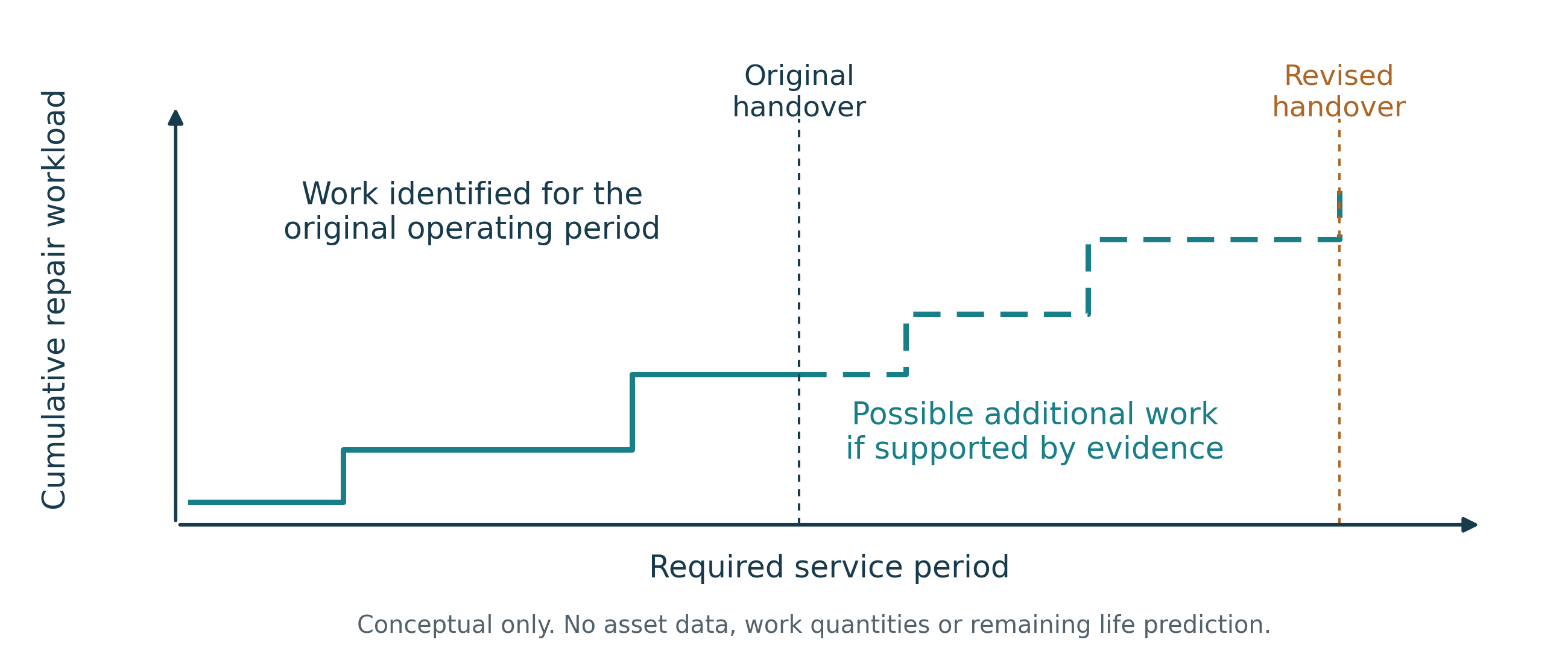
Where handover remains uncertain, test the repair strategy against a credible later date and set a trigger for review. Additional physical repair is not inevitable: the existing assessment may cover the change. Figure 1 illustrates one possible increase in repair scope, not a prediction of what every delay will require.
Check what the existing assessment covers
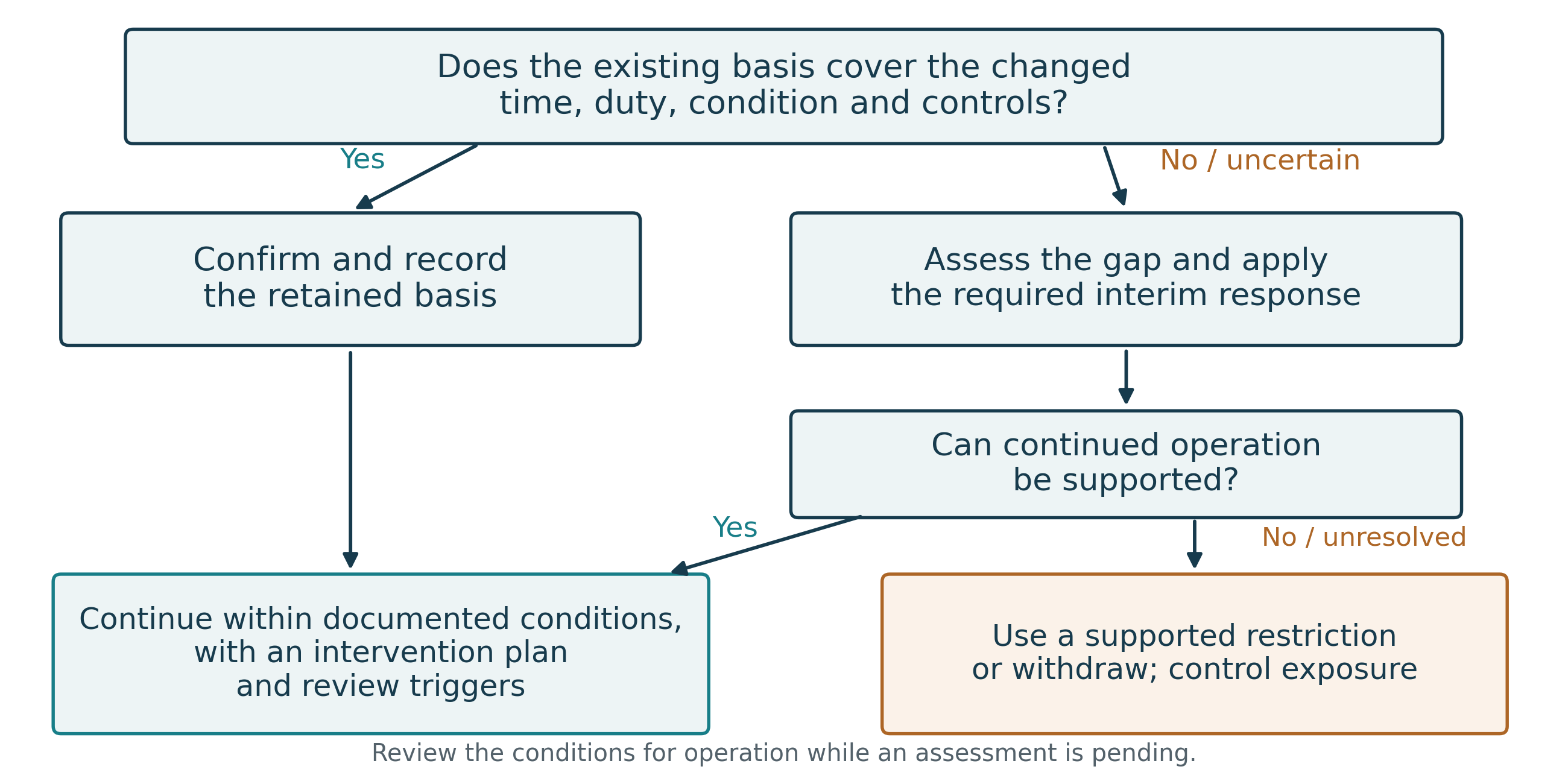
Recover the original assessment, defect and repair history, examination records and conditions of use. Identify the assessed components and failure mechanisms, permitted duty, operating restrictions and required inspections. Check whether the installed configuration still matches the assessment, including previous repairs, added equipment and retained material.
A changed date does not automatically require a new structural model. Establish which assumptions remain valid and assess material gaps before relying on the extension. Review repeated extensions against the original basis and consider interacting deferrals. Queensland mining guidance supports baseline condition audits, risk based repair priorities and inspection intervals suited to damage and failure mechanisms. [2]
Translate additional time into duty and deterioration
Establish operating hours, starts and the luffing, slewing, travel or digging events relevant to the affected detail. Include increased utilisation to recover production and changes in material loading. Tonnes handled are useful for fatigue assessment only where their relationship to local cyclic loading is understood.
Calendar time matters separately. Corrosion can continue while a machine is idle, and a longer standby period may introduce different parked or seasonal wind conditions. Assess the relevant mechanisms. One calendar multiplier applied to every calculation can miss the governing condition.
Make inspection capable of supporting the decision
Establish what was examined, what was obscured, the method used and the damage it could detect and size. Record coverage, access and method limitations. The responsible engineer and inspection specialist need to establish whether the results can support the proposed deferral. An unexamined area cannot be treated as evidence of sound condition.
WA’s Incident Report 274 records a fixed conveyor stacker collapse in February 2019 after corrosion of critical members. Contributory causes included inadequate inspection and maintenance, product accumulation and inaccessible structural areas. It recommends inspection access and repairs within the competent person’s timeframes. Replacement delay was not identified as a cause. [3]
Demonstrate time to detect deterioration and act
A monitored deferral needs a credible opportunity to detect deterioration and complete protective action before the condition becomes unacceptable. Consider progression, detection capability, reporting, engineering review and the time needed to restrict operation, isolate the machine or repair it. Include uncertainty in both the deterioration and response.
For a known crack, a defect specific assessment needs to address dimensions and sizing uncertainty, loads, remaining capacity, credible growth and inspection capability. Establish any inspection interval from that assessment. Nominal fatigue life alone does not establish a safe deferral period. These are engineering assessment considerations; the cited mining bulletins do not prescribe crack acceptance limits.
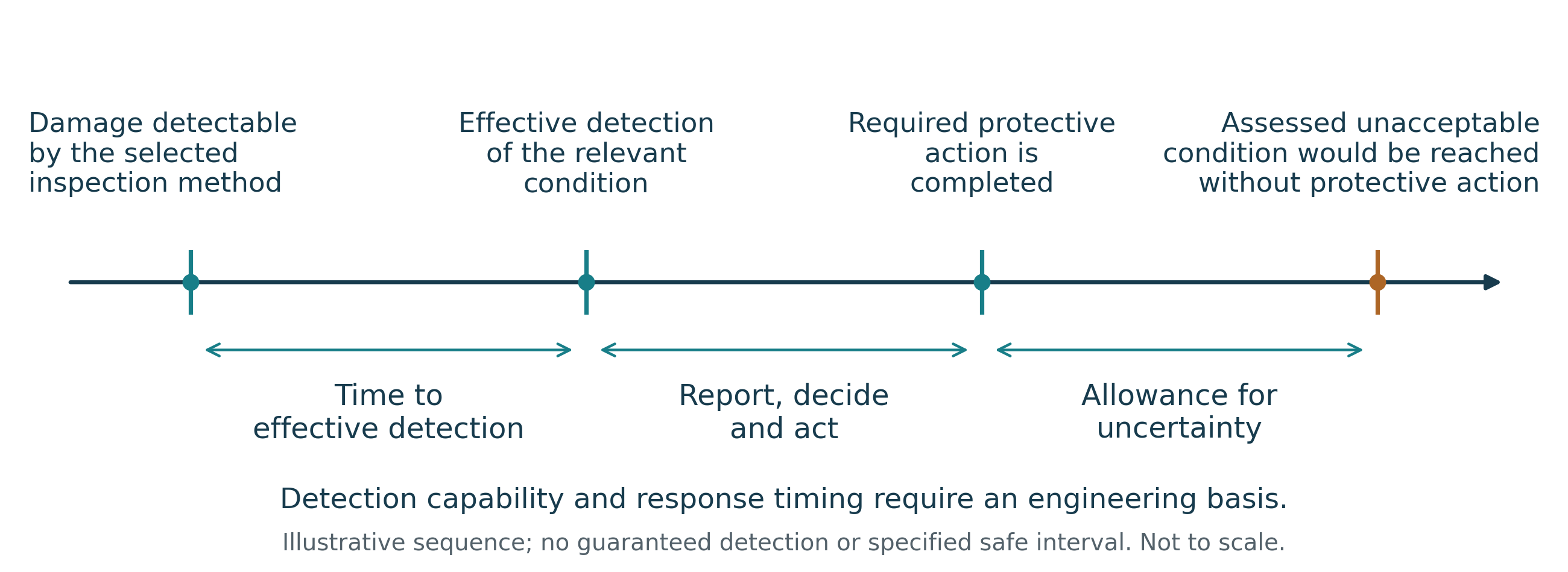
If the critical region cannot be examined adequately, a shorter interval does not resolve the evidence gap. Reassess repair, restriction or withdrawal options where the warning period cannot be supported. Any restricted operation also needs an adequate engineering basis.
Challenge recurring damage before repeating a repair
When damage recurs, check whether the previous repair achieved its intended service period and investigate why it returned. WA Mines Safety Bulletin 124 identifies ineffective weld repairs and failure to address underlying causes among integrity problems. [4] Justify the next repair’s detail, execution, intended duty and any limits on temporary use.
Prepare a repair that can be delivered
A repair forecast identifies likely expenditure. An executable scope establishes the detail, access, lifting, temporary supports, materials, sequence and acceptance requirements. The NSW coal handling inspection programme, which included stackers and reclaimers, found weaknesses in prioritising, assigning, scheduling and verifying structural repairs. [5] Convert each significant finding into work that can be delivered within its assessed timeframe.
Check balance and load transfer during dismantling and jacking, including the condition of retained steel carrying temporary loads. Queensland guidance identifies maintenance loading and removal of members as damage mechanisms. [2] Verify supports for each stage and control gravity and stored energy through the specified isolation and restraint arrangements. [1]
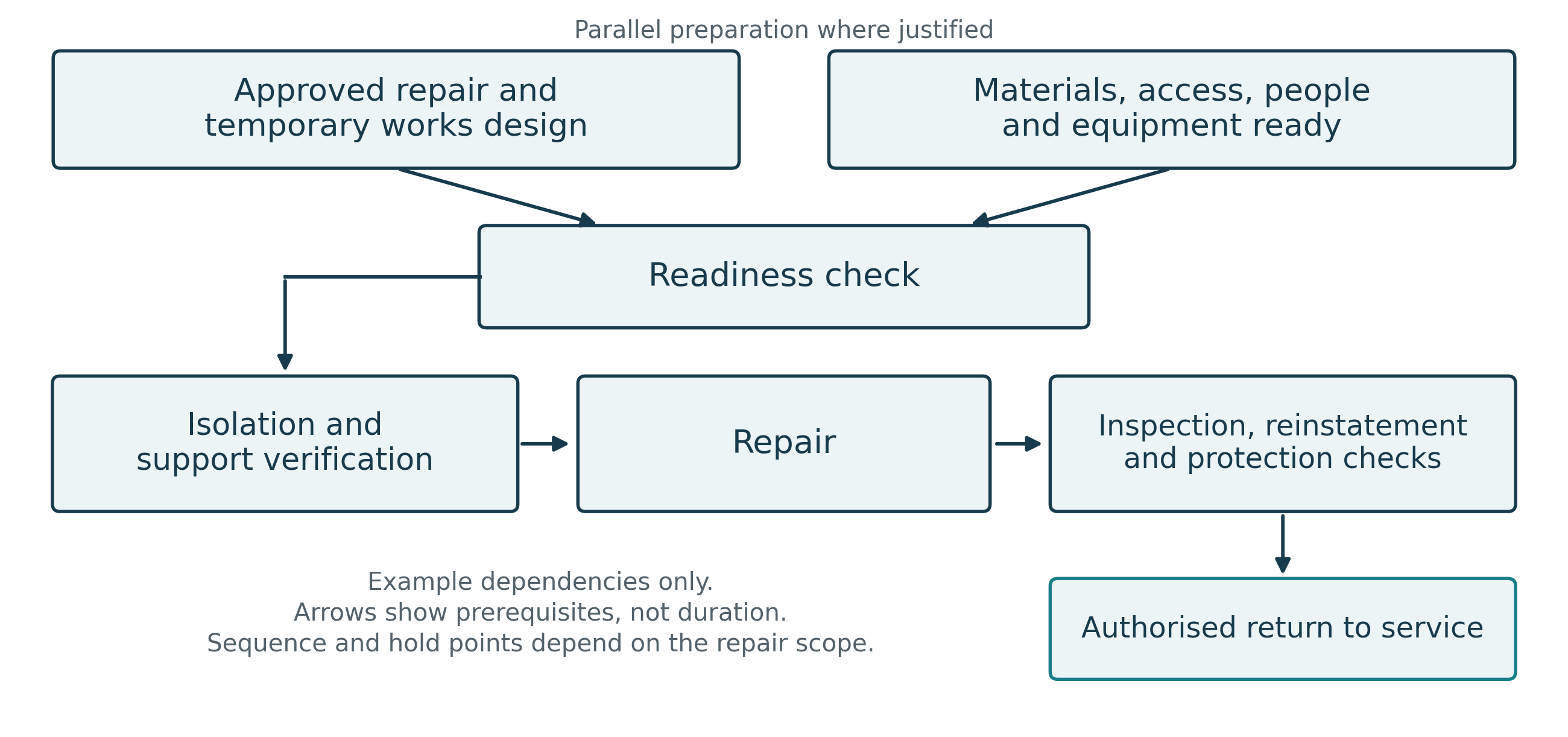
Work backwards from the assessed intervention window through execution, mobilisation, fabrication, procurement and engineering. Identify the latest commitment date for each activity that cannot be recovered later. Allow for uncertainty. If a commitment date is missed, reassess whether the planned intervention remains achievable and what operating response is needed.
Preserve the repair option and verify the completed work
Extra personnel may not shorten work constrained by access, lifting, weld sequence or inspection hold points. Provide for hidden damage, an engineering contact and a practicable contingency. In the shiploader example, preparation may need to start while evidence is obtained for operation to the four month shutdown. Funding preparation preserves an option; it does not authorise continued operation.
Define return to service inspections, tests and authorisation before work starts. Verify affected protection settings and the final support arrangement. Record the completed configuration, accepted deviations and remaining operating conditions. WA’s plant code addresses testing altered plant and recommissioning against design specifications. [1] Confirm the repair covers the required remaining duty.
Check interacting deferrals and supportable options
Review significant deferrals together where they share a load path, reduce redundancy, rely on the same protection or compete for repair resources. Compare monitored continuation, repair, component replacement and withdrawal only where each has an adequate engineering basis.
Compare the complete intervention. A small weld may require substantial dismantling and temporary works. Shared access can reduce duplicated effort, but each task still needs a justified detail and sequence.
Agree production consequences with operations and finance using site records and a defined outage scenario. Account for stockpiles, alternative equipment and recoverable production. Nominal throughput multiplied by sale price can overstate the consequence. Establish the output lost and the costs actually changed by the decision.
Record the trigger and the required response
Record the operating basis, next evidence update, repair commitment date and intervention window. The engineer defines technical conditions; the owner assigns decision authority and resources; operations implements the controls. A NSW assessment covering 2024 to 2026 recommends linking structural defects to site management systems and communicating repairs, modifications and access restrictions. [6]
| Changed circumstance | Required response | Evidence to update |
|---|---|---|
| Handover or duty changes | Confirm coverage of the existing basis or assess material gaps. | Programme, condition and duty |
| Examination is missed or inadequate | Apply the defined interim response and resolve the evidence gap. | Coverage, capability and access |
| Deterioration exceeds the assessed condition | Implement the defined restriction or withdrawal and review. | Comparable measurements and loading |
| Preparation or shutdown slips | Reassess the achievable intervention window and operating response. | Outstanding work and remaining lead time |
| Deferrals interact | Assess the combined effect on capacity, protection and response. | Shared load paths, controls and resources |
If a condition required for continued operation is lost, implement the defined interim response. Where operation cannot be supported, withdraw the machine and control exposure pending assessment. A review in progress does not justify continued use. WA mining guidance calls for immediate protective measures where structural strength or reliability is inadequate. [4]
Bring the engineering basis and delivery plan together
For the shiploader example, establish whether the evidence supports operation to the four month shutdown and commit early enough to deliver any required repair. If either condition cannot be met, revise the operating plan. Confirm the completed repair covers service through handover and any backup period.
ACE can assess the structural consequences of replacement delays and define the evidence, repair scope and technical conditions required for a supported decision, coordinating mechanical and control dependencies with the relevant specialists.
References and related reading
[1] Work Health and Safety Commission, Western Australia (2022). Managing risks of plant in the workplace. Code of practice, foreword and sections 3.2, 3.4–3.6 and 4.5. View source
[2] Resources Safety & Health Queensland (2022). Integrity of Structures at Mineral Mines and Quarries. Bulletin 202, version 1, 10 June 2022. Key Issues and Additional Guidance. View source
[3] Department of Mines, Industry Regulation and Safety, Western Australia (2019). Structural failure of fixed conveyor stacker. Mines Safety Significant Incident Report 274, 18 March 2019, pp. 1–2. View source
[4] Department of Mines and Petroleum, Western Australia (2015). Structural safety of buildings, plant and other structures. Mines Safety Bulletin 124, 16 September 2015, pp. 2–5. View source
[5] NSW Resources Regulator (2017). Consolidated report — Structural integrity of coal handling and preparation plants. November 2017, pp. 4–5 and 22. View source
[6] NSW Resources Regulator (2026). Report — Coal — Structural collapse or failure — September 2024 to March 2026. Recommendations section. View source